The Real Thing | Links Golf and the 2027 Planning Window
If you love links style golf like me, this time of year is both a blessing and a curse.
The US Open last week at Shinnecock Hills — with the required Corey Pavin 4-wood nostalgia — and the Open Championship at Royal Birkdale arriving in two weeks. Two majors, four weeks apart, both befuddling the world's best players with wind, sand, and fescue. For those of us who live for this style of game, it's the sweet spot of the whole golfing calendar. Unfortunately, this is also when the dreaming begins. The dream of actually playing there. Aye, there's the rub.
What Makes a True Links Course
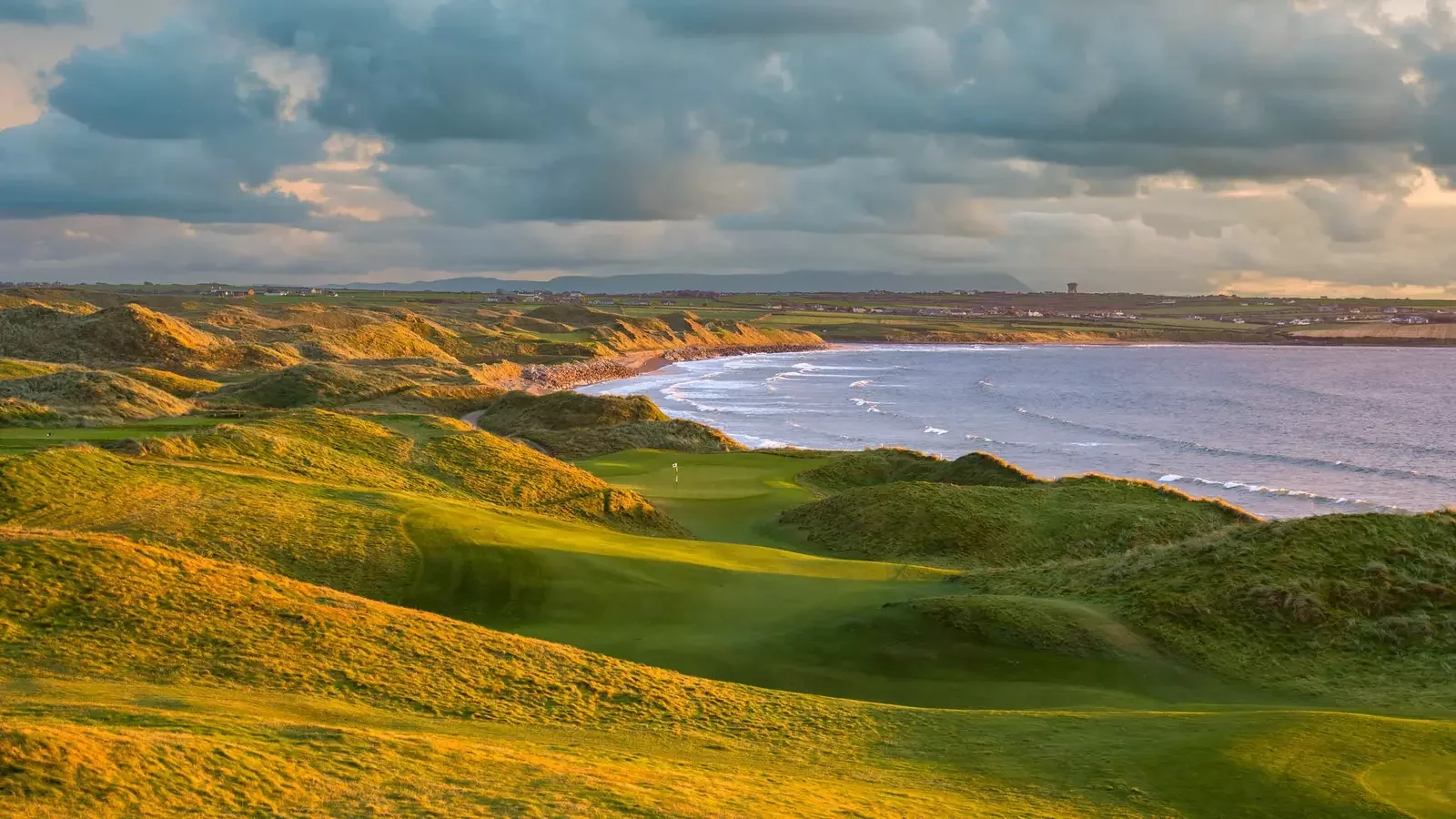
Shinnecock Hills is always a visual delight to watch on TV. Those sloped, running greens. The golden fescue baking in the Long Island sun. Sand everywhere. Glimpses of the Atlantic beyond the dunes. It plays like a links course — it punishes the same mistakes, rewards the same creative, low shots. But as we links-purists know, Shinnecock Hills is not a true links course.
A true links sits on linksland. The definition is strict, as laid out in our links bible — True Links by George Peper and Malcolm Campbell. I'm staring at my copy right now. The criteria don't leave much room for argument:
- The course must sit beside a river estuary
- It must offer partial or occasional views of the sea
- It must have few trees
- It must have numerous bunkers
- The nines must run out and back from the clubhouse
- The turf must be sand-based, draining hard and fast year-round
- The site must be fully exposed to strong, variable winds
The word "links" itself comes from the Old English hlinc — rising ground. These are ancient coastal landscapes, shaped by glacial retreat and centuries of wind. The turf drains so quickly that the ground plays firm and fast year-round. There are no trees to shelter you. The wind isn't a factor — it's the architect.
At the time of the book's writing in 2010, 246 courses in the world made that official cut. Royal Birkdale is one of them. Shinnecock Hills is not.
The Courses Worth Dreaming About
On July 16, we get the real thing. The Open Championship. And if you're like me, you'll spend that weekend on the couch — watching the pot bunkers, fescue, and gorse (oh my!) — and be left with one persistent thought: I need to play there.
That feeling doesn't go away. It gets worse.
So let's talk about where it leads. The top links courses in Ireland and Scotland are not interchangeable scenic backdrops. Each one has a personality — a set of demands, a particular way of humbling you — that stays with you long after the round.
Ballybunion, on the wild Atlantic coast of Kerry, may be the most dramatic links setting in the world. The Old Course perches on clifftops above the Shannon estuary, routing along ridges with 100-foot drops into the sea. Tom Watson called it one of the greatest courses he ever played. He was right.
Lahinch, in County Clare, is sometimes called the St Andrews of Ireland — not just for the quality of the golf but for the way the town and the course have grown together over more than a century. The goats still roam the property. When they shelter near the clubhouse, rain is coming. That is not a metaphor.
Royal County Down, framed by the Mourne Mountains and Dundrum Bay in Northern Ireland, is consistently ranked among the top five courses in the world. It is visually stunning and strategically unforgiving. It earns every superlative.
Carnoustie, on the Angus coast of Scotland, has earned its nickname — Car-nasty — through decades of hosting Opens that exposed the world's best players as merely human. Barry Burn. The closing stretch. It is not a course that flatters.
And then there is The Old Course at St Andrews. The home of golf. The Swilcan Bridge. Six hundred years of history playing out on a stretch of linksland shared, improbably, with a public park. To stand on the first tee at the Old Course is to feel the full weight of the game. Gulp.
Why Your 2027 Planning Window Is Now
Here is the part that surprises most golfers when they first start thinking seriously about a links trip: the logistics require a longer runway than you think. The top courses — particularly St Andrews, Royal County Down, and Ballybunion — release tee times well in advance, and the best slots fill quickly. For a well-planned 2027 trip, late summer and fall 2026 is exactly the right moment to begin. Waiting until January often means settling.
A well-designed links trip typically runs at least six to ten days, can combine two separate areas - even both Ireland and Scotland- and moves at a pace that lets the golf breathe. The goal is not to check boxes. It is to understand what this land does to a golf ball — and to you — when the wind comes in off the Atlantic at thirty miles an hour and the scorecard becomes beside the point.
As someone who plans these trips and loves this golf as much as my clients do, I can tell you: no two are alike. The routing, the sequence of courses, the places to stay between rounds — these choices matter, and they make the difference between a good golf vacation and the trip you talk about for the rest of your life.
So here's my pitch. Don't just watch the Open. Use it.
Let Birkdale do what it does. Let the feeling come. Then reach out, and let's start building the trip.
Let's go from couch to course.