The Odyssey, Sicily, and Hospitality
I went to see the Odyssey movie on opening night and loved it. I am heading back next week for a second viewing for the full IMAX experience. I also dusted off my old copy of the epic poem and have re-read for the first time since high school. It's been fun to revisit in that copy my original notes and doodles, but to see the story in the new light of middle age.
What I always loved about reading the classics is its reminder of the timelessness of human nature. Our pursuits, our habits, our joys, and the obstacles we face echo ages past. The themes of the Odyssey especially resonate with my transition to the travel business. Homer's narrative centers mostly around the travel cycle — adventure, hospitality, obstacles, personal growth, and homecoming. At the center of it is xenia — the sacred duty to welcome the stranger, feed him before you ask his name, shelter him before you judge him — a refrain throughout the poem. Nearly every stop on Odysseus's ten-year detour is a test of it. Circe. The Phaeacians. Eumaeus the swineherd, who has almost nothing and still sets a table. And then there is Polyphemus, the Cyclops, who breaks the rule in the worst possible way — by eating his guests instead of feeding them.
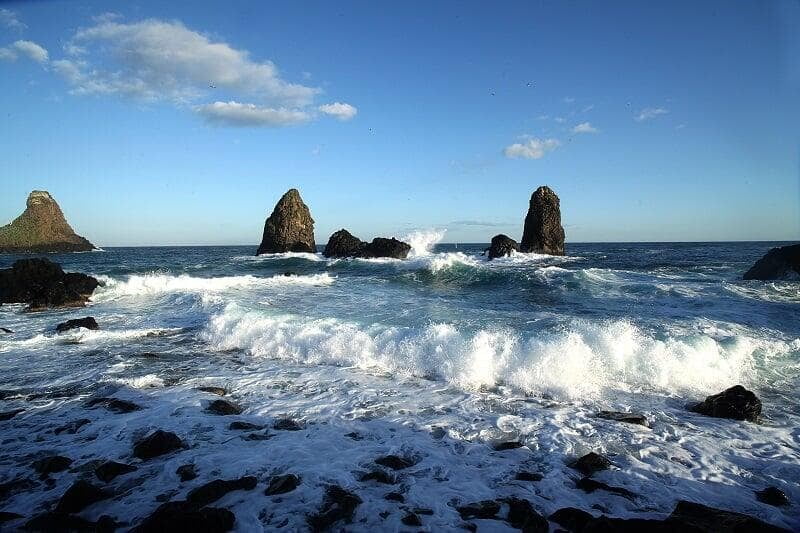
The Cyclops episode is long believed to be sited near Sicily — the rocks off Aci Trezza, said to be hurled by Polyphemus at Odysseus's fleeing ship, are still pointed out to visitors today. Nolan filmed some scenes of the movie nearby in the Aeolian and Egadi Islands — Lipari, Vulcano, Favignana — and at a clifftop called Pietra del Bagno.
I'm headed to Sicily this November for a conference, and I'll look at that coastline differently than I would have a year ago. Not just as beautiful — though it is — but as ground where one of the oldest ideas about how to treat a stranger was supposedly written. If Sicily has been on your list — Cyclops rocks, volcanic islands, or otherwise — I'd love to help you plan the visit, and I will leave you with the closing lines of Tennyson's "Ulysses," Homer's hero grown old:
...tho'
We are not now that strength which in old days
Moved earth and heaven, that which we are, we are;
One equal temper of heroic hearts,
Made weak by time and fate, but strong in will
To strive, to seek, to find, and not to yield.